
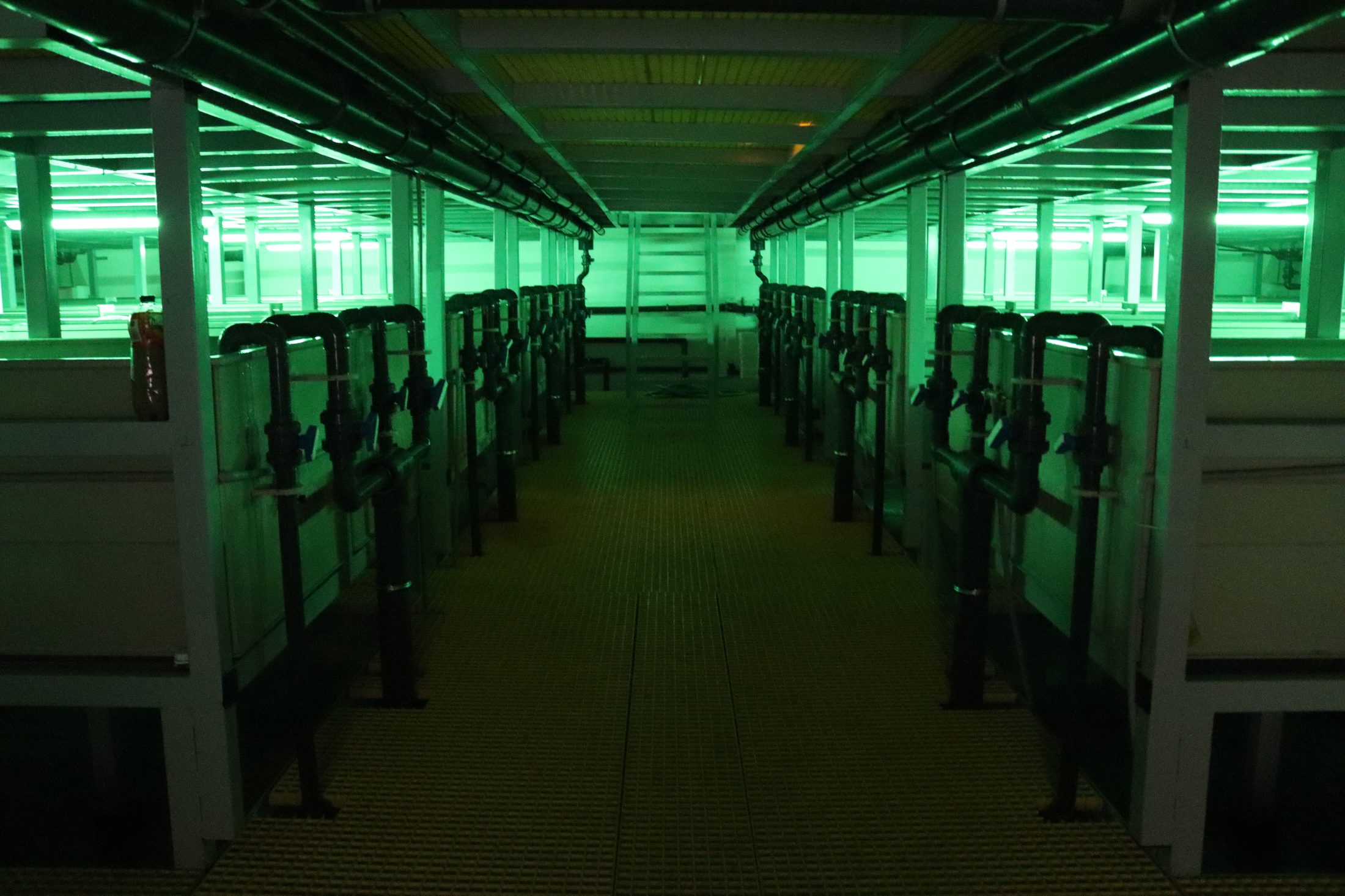
The future of fish production is on land.
Aquaculture now supplies more than half of all fish consumed worldwide — and land-based RAS is the fastest-growing segment of the industry.
A controlled, closed-loop alternative to nature’s limits.
Global demand for fish continues to grow while wild capture fisheries have reached their biological limits. Unlike pond farming, land-based RAS operates in a fully controlled, closed-loop environment — eliminating dependence on natural water bodies, dramatically reducing disease risk, and enabling production anywhere in the world, regardless of proximity to coastlines or suitable water sources.
The Global Challenge
World fish consumption has more than doubled in 50 years and is projected to grow a further 30% by 2050. Wild capture fisheries have been at maximum sustainable yield since the 1990s. The industry needs a new production model — and land-based RAS is the answer that scales.
The RAS Advantage
Closed-loop production using up to 99% less water than traditional pond methods. No effluent discharge to natural water systems. Zero antibiotic dependency when properly designed and operated. Production sited near urban markets — reducing cold chain logistics and carbon footprint significantly.
The Middle East Opportunity
The GCC imports approximately 70–80% of its fish consumption. Limited coastal aquaculture potential, extreme climate and strong food security mandates make the region one of the world’s most compelling cases for land-based RAS investment. ADEC is ready to be the region’s delivery partner.
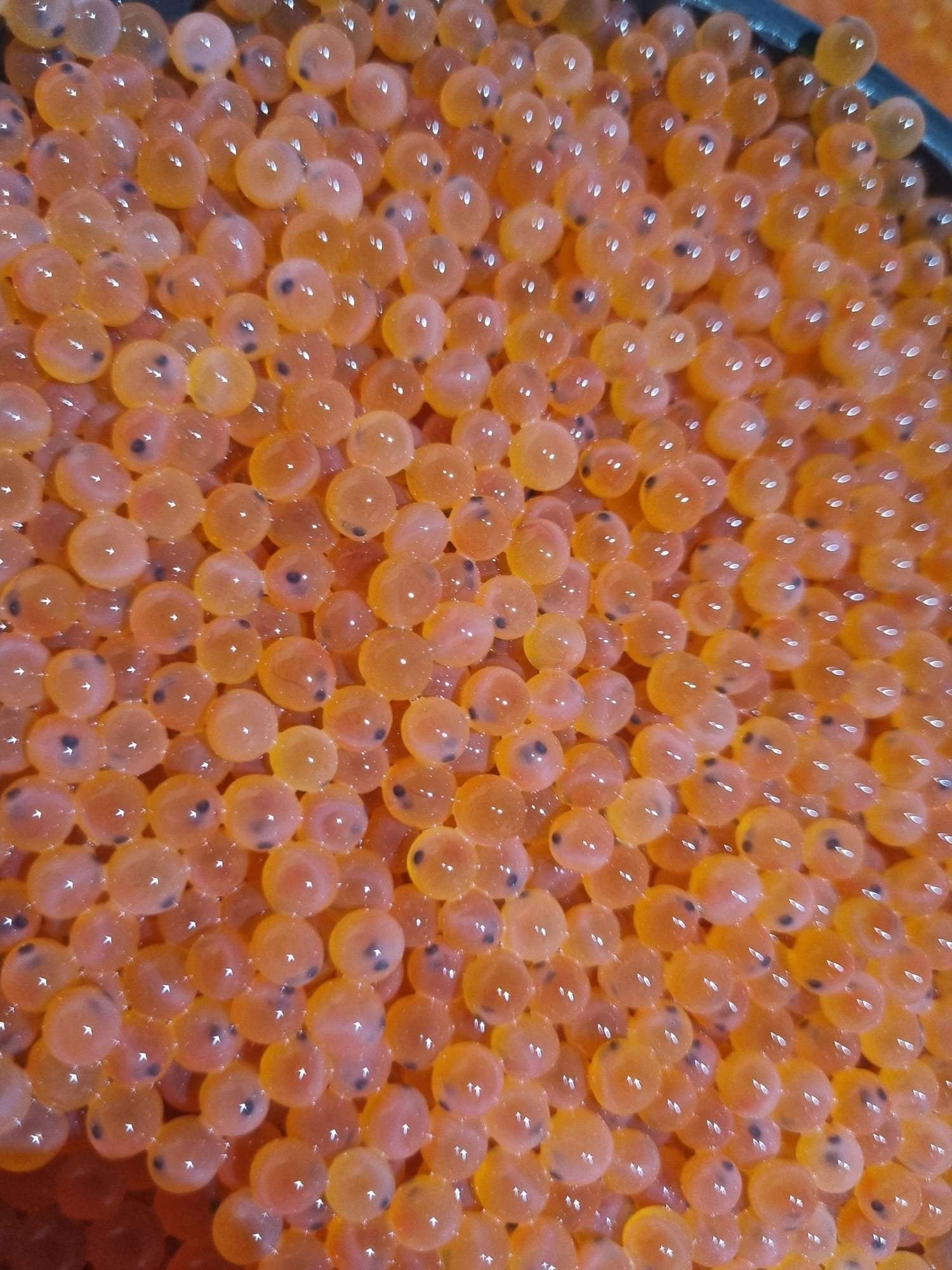
Aquaculture now supplies more than half of all fish consumed worldwide.
And the most reliable, biosecure way to produce it at scale — on land, in a fully controlled environment — begins in a recirculating hatchery like the one we operate at Milas.
Why RAS wins on land
| Pond Farming | Net Cage | Land-Based RAS | |
|---|---|---|---|
| Location independence | ✗ | ✗ | ✓ |
| Water use | Very high | N/A | Minimal |
| Disease control | Poor | Poor | Excellent |
| Year-round production | Climate dependent | Climate dependent | ✓ |
| Antibiotic-free possible | Rarely | Rarely | ✓ |
| Urban siting | ✗ | ✗ | ✓ |
A strategic answer to a regional imperative
For the Middle East, land-based RAS is not simply a production technology. It is a strategic response to the region’s most acute food security vulnerabilities — water scarcity, extreme climate, limited coastal potential, and dependence on imported protein.
Water Efficiency
RAS recirculates 95–99% of process water. A 1,000-tonne-per-year facility uses roughly 500–1,000 m³ of make-up water daily — versus 500,000–1,000,000 m³ for equivalent pond production. In a water-constrained region, this is a business model prerequisite.
Zero Antibiotic Dependency
A properly designed and operated closed-loop RAS can achieve commercial production without routine antibiotic use — demonstrated in practice at Milas. For premium retail channels in Europe and the GCC, antibiotic-free certification is increasingly a purchasing requirement.
Import Substitution
The GCC imports an estimated $4–5 billion in seafood annually. A land-based RAS facility producing sea bass, sea bream or tilapia for local consumption eliminates the import cost, cold chain emissions and supply chain vulnerability of equivalent imported product.
Location Independence
Land-based RAS can be sited anywhere with reliable power, a treatable water source and road access — in an industrial zone, on the edge of a city, or in a desert environment. For the GCC, where geography rules out most conventional aquaculture, this is transformative.
Land-based RAS, explained
Land-based RAS delivers higher biosecurity, predictable year-round harvests, dramatically lower water use and no dependence on coastal sites or weather. It removes risks such as disease from wild stock, escapes and algal blooms, and lets producers locate close to their target market.
Yes — RAS is one of the few models well suited to the region. Because the water is fully recirculated indoors, RAS uses up to 90–99% less water than open systems and is independent of sea temperature, making local, sustainable fish production viable across the arid GCC.
A well-designed RAS reuses the vast majority of its water, topping up only a small daily percentage to replace evaporation and filtration losses — typically a fraction of the freshwater required by pond farming for the same output.
RAS targets high-value species with stable, year-round output and premium positioning (local, traceable, antibiotic-free). Profitability depends on correct sizing, energy strategy and operational discipline — which is exactly why ADEC pairs facility delivery with production planning and operator training.