Feasibility to first harvest — and a team ready to run it.
Six stages. One contractor. One outcome. ADEC manages the entire journey under a single point of accountability.
Six stages, one contractor
Production Planning & Feasibility
Every ADEC project begins with an honest feasibility assessment: species selection, production volume modelling, site and water source analysis, capital and operating cost modelling, and financial return projections. We have operated our own facility long enough to know the real operating costs of land-based RAS — our feasibility numbers are grounded in that reality, not optimistic assumptions.
Facility Design
Complete facility architecture: tank hall layout, biosecurity zoning, staff workflow, utility infrastructure and future expansion planning. ADEC designs with operability as the primary criterion — because we know, from Milas, that a facility that is difficult to operate will be operated poorly.
RAS Design & Engineering
Detailed system engineering: hydraulic modelling, equipment sizing, P&ID drawings, electrical and automation specifications, SCADA design and energy optimisation — sized for the target species, production volume and site conditions. All engineering is production-ready, not conceptual.
Manufacturing & Supply
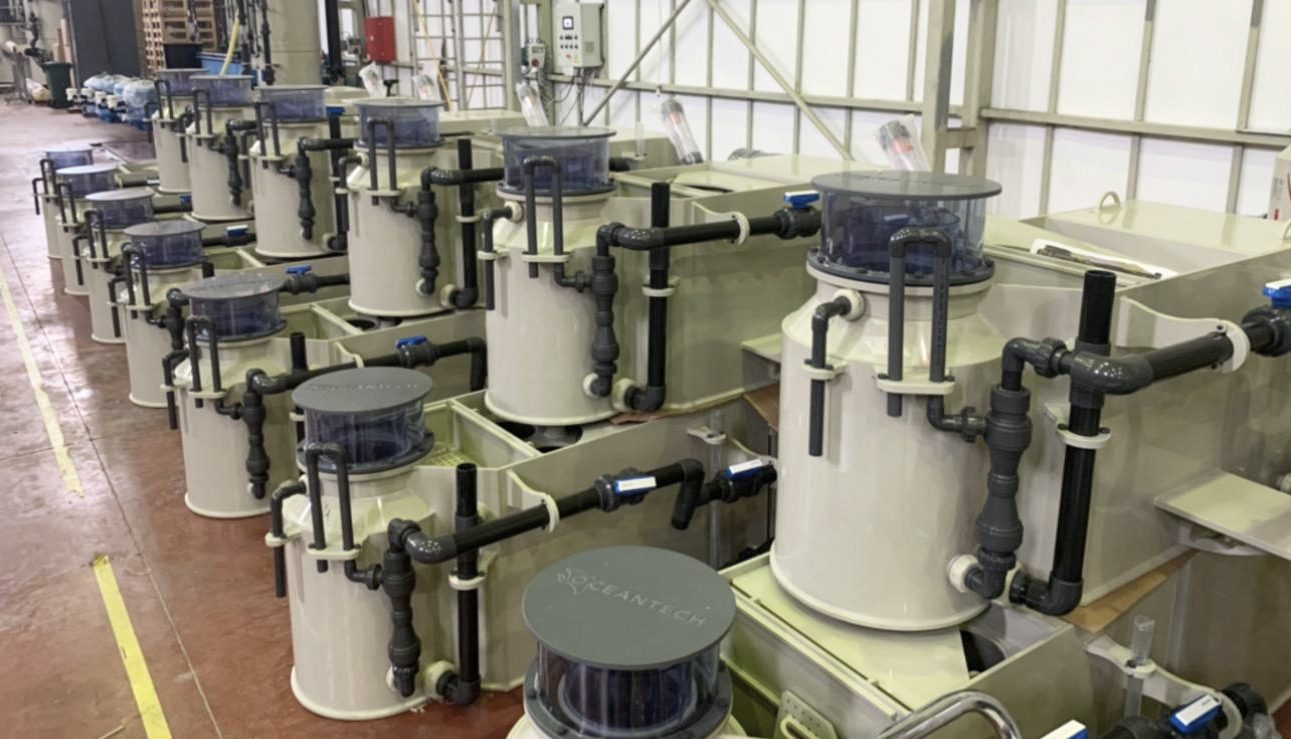
Core RAS equipment manufactured in-house under the OCEANTECH™ brand at our Turkish facilities and factory-tested before shipment. Third-party equipment (pumps, chillers, blowers, SCADA hardware) sourced, integrated and supplied as part of the complete package — engineered for the specific project.
Installation, Commissioning & Client Training
On-site installation by ADEC specialist teams. Full biological commissioning, managed by the same team that commissions and maintains our Milas facility. And critically: structured client team training at Milas, scheduled so operators are facility-ready before handover day. We do not hand over the keys until the system is stable and the team is confident.
Operations Support & Management
Post-handover technical support, preventive maintenance contracts and spare parts supply. For clients requiring complete operational management, ADEC provides facility management services — the same management discipline applied at Milas, delivered at the client's facility.
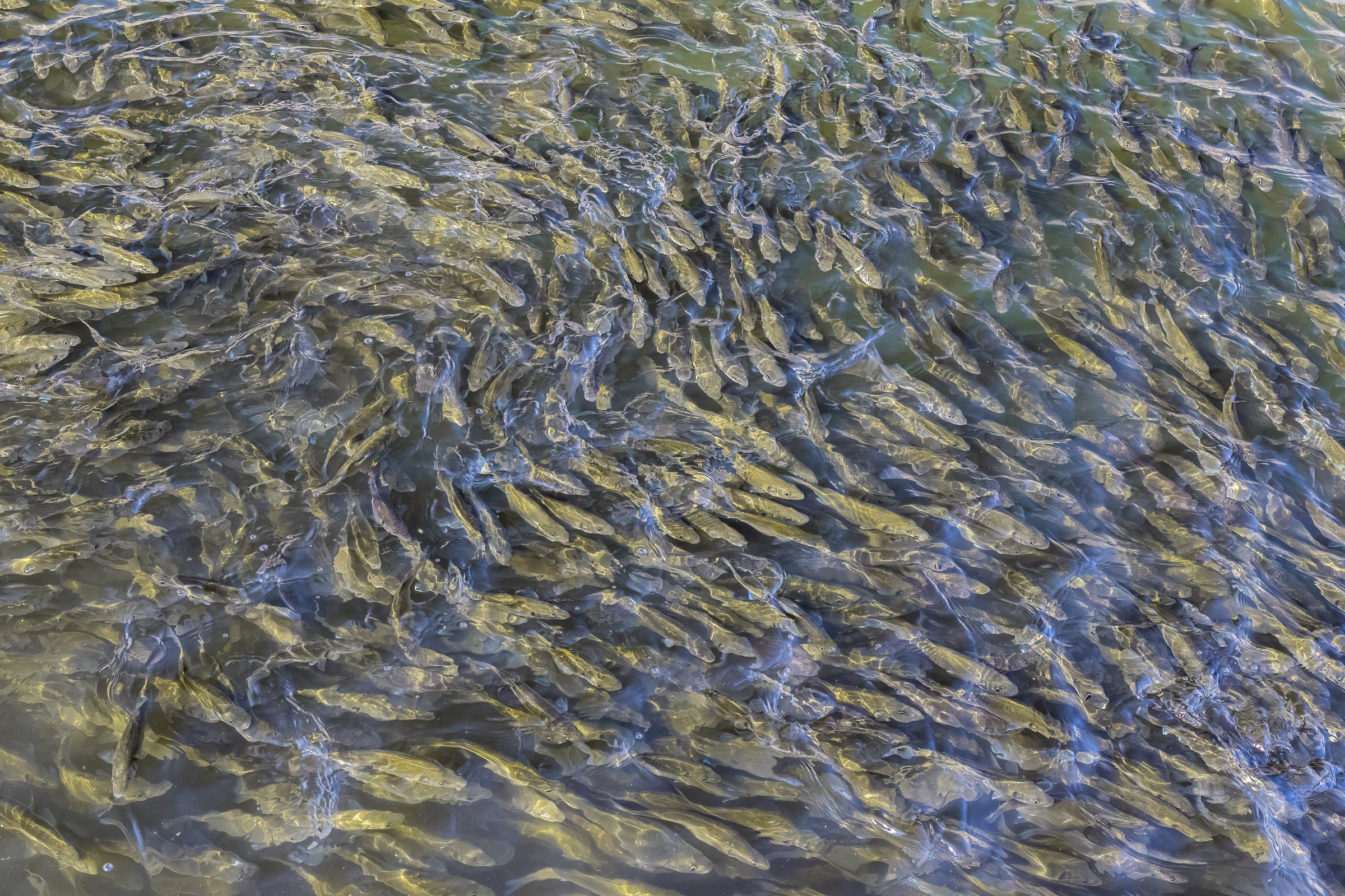
We don't just hand over the keys — we make sure the team is ready to run it.
Designed by people who have operated what they design
ADEC's facility design philosophy is shaped by a single principle: every layout decision must make operational sense. It is the product of running our own facility and learning — repeatedly and specifically — what makes a production manager's life easier or harder.
Biosecurity Zoning
At Milas, we have managed the consequences of inadequate biosecurity — and used those experiences to develop a zoning methodology now standard in all ADEC designs. Quarantine, production, processing and staff areas are physically segregated with controlled access, dedicated equipment sets and hygiene transition points.
Operational Access — Not Just Engineering Access
Every pipe run, valve, sensor and item of equipment is positioned for the person who will maintain it at an inconvenient time, in a wet environment, under time pressure. Our Milas operators have told us — in very direct terms — when a design decision made their job harder. Those conversations shape every design.
Hydraulic Efficiency
Energy is the largest operating cost in RAS. ADEC designs minimise head losses, maximise gravity flow where feasible, and specify variable-frequency drives on all major circulation equipment. Milas operational energy data informs the efficiency targets we set for clients.
Redundancy at Critical Points
Every failure scenario we have experienced or managed at Milas is reflected in the redundancy we specify: backup aeration, emergency oxygen, standby pumps, power backup for critical monitoring. The cost is small relative to the value of the fish stock it protects.
Scalability Built In
At Milas we have expanded our own facility and understand the cost of retrofitting expansion capacity into a facility not designed for it. ADEC designs every client facility with future phases considered from the start — oversized utility connections, expansion-ready structures and modular water treatment.
Water Source Planning
Milas draws from five bore holes spanning 0–25 ppt salinity, giving us direct operational experience of multi-source water management, pre-treatment requirements and the variability natural sources introduce. We apply that experience to every water source assessment we conduct.
Working with ADEC
One contractor covers all six stages: production planning, facility design, RAS engineering, in-house manufacturing of OCEANTECH™ equipment, installation & commissioning, and ongoing operations support — so responsibility is never split between multiple vendors.
Timelines depend on capacity, species and site, but ADEC compresses schedules by manufacturing core equipment in-house and reusing proven designs validated at its own Milas facility. Each project begins with a feasibility and production plan that sets a realistic delivery roadmap.
Yes. Client teams can train on live equipment at the Milas facility, and ADEC provides commissioning support, operating protocols and ongoing technical assistance so the farm reaches stable production and first harvest.
Feasibility and production planning is the first stage of every ADEC engagement. We model species, target volumes, biomass curves, water and energy demand, and site constraints before any equipment is specified — reducing risk and protecting the investment.
Explore more from ADEC
OCEANTECH™ RAS Equipment
Drum filters, MBBR biofilters, oxygen and UV systems for fish farms.
Learn moreWhy Land-Based RAS
The sustainable, biosecure case for RAS aquaculture in the Middle East.
Learn moreMilas Operating Fish Farm
Our own 23,327 m² land-based RAS facility and client training site.
Learn more